REACH ME
(+381 ) 65 - 265 - 8527
HI@DEVMILOSH.COM
MY RESUME

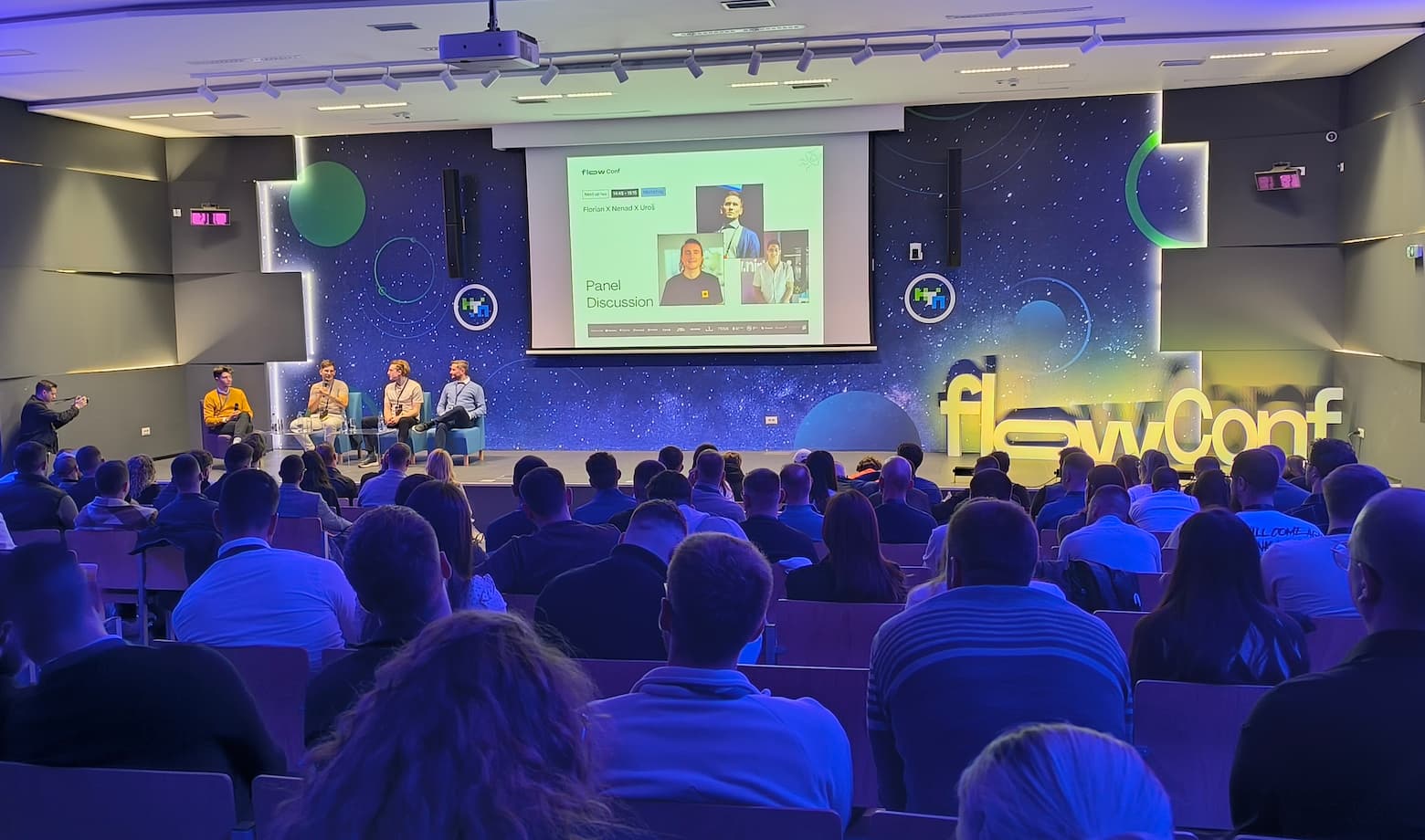
Alex Iglesias from Finsweet opened with the question every Webflow developer eventually faces. His answer wasn't a clean either/or — it was a reminder that the real skill is knowing when to reach for code and when to step back. A small custom interaction here, a no-code CMS structure there. The blend is the craft.
Florian Bodelot from Digidop made a case that stuck with me: stop spreading your content across every platform and start treating your website like the one place that actually belongs to you. Social media rents you an audience. Your website owns it. Simple idea, but hearing it framed that way made me think differently about how I approach client projects.
Webflow's Director of Community & Agency Marketing joined virtually for a live Q&A. What made this session work wasn't the format — it was her honesty. No polished PR answers. Just real talk about the Webflow community, what freelancers actually struggle with, and where the platform is headed. Rare to get that kind of access.
Nenad Ivanovic from Nursa walked through how Nursa.com scaled on Webflow at an enterprise level — integrating it with other technologies while keeping SEO and business objectives in check. The takeaway: Webflow's ceiling is higher than most people assume. The platform grows with you if you know how to push it.
Dawid Skubisz from Tonik was the highlight of the conference. In a single year, he doubled his agency's team, built Europe's largest Webflow website, and became Poland's first Webflow Enterprise Agency. He told the story with the energy of someone who genuinely loves what they do — tequila nights in San Francisco, mountain treks in Marbella, and somewhere in between, a serious no-code operation that keeps scaling. The kind of talk that makes you want to go home and build something.
Goran Bajazetov from Mindcast shared what it actually took to build and eventually sell a leading design agency in the Balkans. Not a motivational speech — a real breakdown of decisions, mistakes, and the moments that defined his agency's direction. Grounded and practical in a way that most "growth" talks aren't.
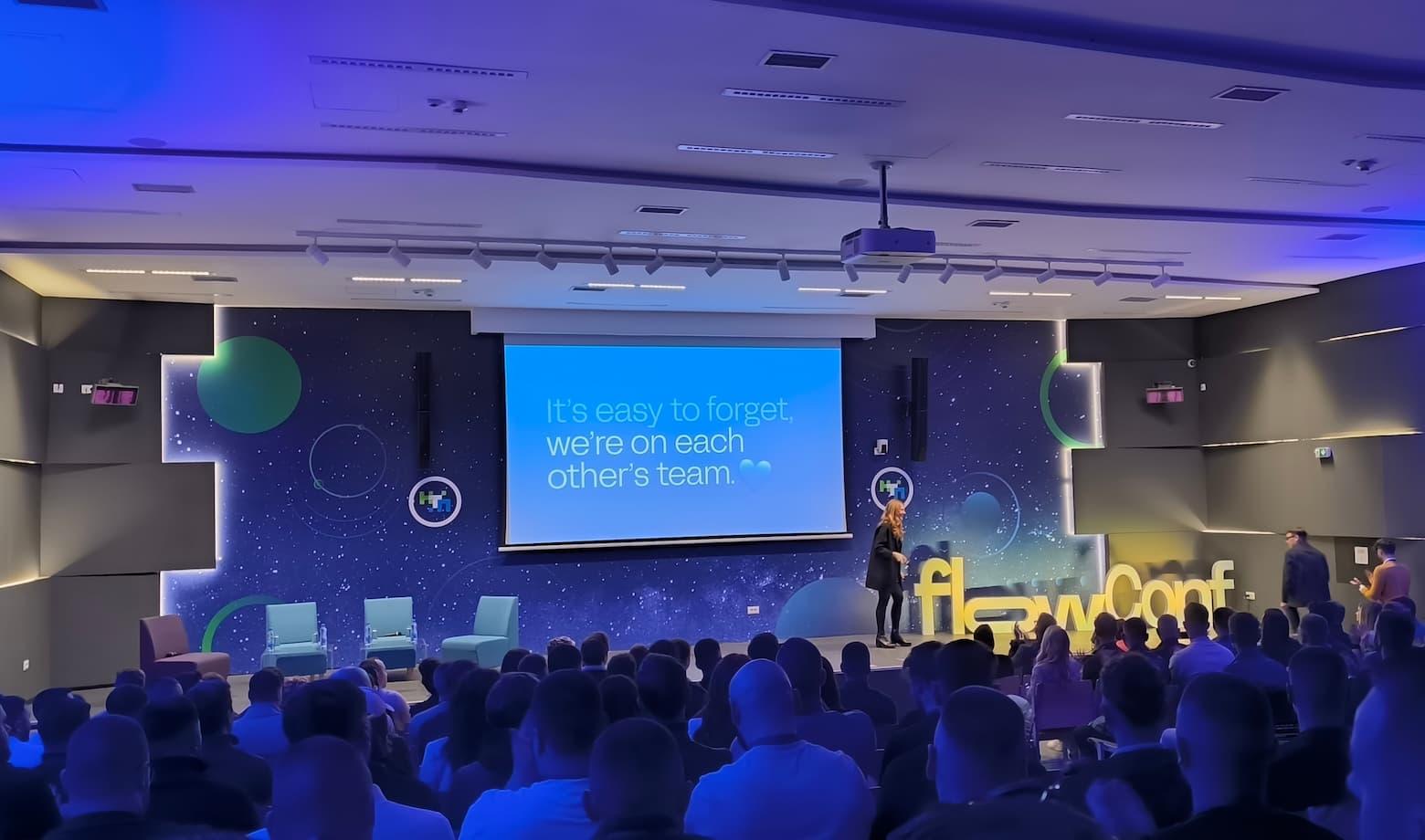
Nuša Willenpart and Marin Mešter from Flowout gave the talk I didn't know I needed. Their core point: being technically excellent is not enough if you're difficult to work with. Empathy, adaptability, and clear communication are design skills too — they just don't show up in your portfolio. A good reminder to check yourself, not just your work.
Uroš Mikić, CEO of Flow Ninja, walked through how his team generated over $2 million in annual pipeline — not through AI tools or market trends, but through consistent, intentional improvements to their own website. Traffic up, conversions up, revenue up. The website did the selling. It's the most straightforward growth strategy I've heard in a while, and it works because most agencies ignore their own site while building everyone else's.
Miloš Grozdanović from Science Technology Park Niš closed out with a look at Serbia's tech ecosystem — government, academic, and private sector partnerships building infrastructure for startups and regional growth. It's easy to overlook what's happening here. This talk was a reminder not to.
FlowConf didn't just confirm what I already believed about no-code — it pushed me to question a few assumptions. I'm leaving with one concrete change: I'm going to treat my own website the way I treat my best client projects. Consistent updates, real strategy, actual attention. If Uroš's team can build a $2M pipeline from their site, there's no excuse for mine to sit on autopilot.
Same time next year. No question.
.png)
.png)
.png)